Thursday, February 01, 2007

There Is No Greater Disappointment

…than looking at an HTML syllabus, getting excited that the professor is smart enough to just use simple text-based formats instead of needlessly resorting to Word or PDF, but then viewing the source and seeing this:

<html xmlns:v="urn:schemas-microsoft-com:vml" xmlns:o="urn:schemas-microsoft-com:office:office" xmlns:w="urn:schemas-microsoft-com:office:word" xmlns:st2="urn:schemas:contacts" xmlns:st1="urn:schemas-microsoft-com:office:smarttags" xmlns="http://www.w3.org/TR/REC-html40">

You just exported that shit from Word! You're a fraud! Richard Freeman, I thought we could have something together, but I guess I was wrong.

Wednesday, January 03, 2007

Adoring Fans

I've come to realize in dramatic fashion that this blog, and the interests it draws on, are a liability in my life, at least for now. Blog silence will prevail for quite some time. Sorry.

Tuesday, January 02, 2007

Curveball, Futurist Edition

More blockquoting from Edge. This time, I give you Jaron Lanier, who looks a bit like a Psychlo:

If all this sounds a little too fantastic or obscure, here's another approach to the same idea using more familiar reference points. Imagine a means of expression that is a cross between the three great new art forms of the 20th century: jazz improvisation, computer programming, and cinema. Suppose you could improvise anything that could be seen in a movie with the speed and facility of a jazz improviser. What would that mean for the sense of connection between you and someone you love?

It would mean that we were both awesome. There are plenty more details if you follow the link, but honestly: what a beautiful idea.

On a less reverent note, that Wikipedia article on Psychlos (the alien villains from Battlefield Earth) explains that (according to L. Ron Hubbard) "because of their extra digit, the Psychlos naturally developed a 'base 11' positional notation system, the mathematics of which is the basis of the teleportation technology that enabled them to dominate the galaxy." Um. Besides being ridiculous on its face and mathematically idiotic – base 11, base 10, who cares, it's just notation, and even if it does have some effect on the development of mathematics, that effect would undoubtedly shrink to nothing by the time a culture came up with the technology necessary for teleportation — this premise fails to take into account the fact that polydactyly — extra fingers or toes — is actually a genetically dominant trait in humans. So if working "naturally" in base 11 really did translate into reproductive success — which is precisely Hubbard's claim, at least according to Wikipedia — then polydactyl humans should be everywhere. Not just because their genes would own the pool, but because they could fucking teleport.

Further Wiki probes reveal that the Amish have higher rates of polydactyly than other groups, which I suppose I could have guessed. This immediately suggests an idea for what would be an all-time classic sci-fi movie — one that would not only rake in billions at the box office but finally end the brutal war between Scientologists and the Pennsylvania Dutch.

Not an action movie — an action-at-a-distance movie.

(Wamp wamp.)

Admirably Even-Handed

I'm sure we've all done this before, but:

screenshot of auto-complete options for Google search on 'google is'

Monday, January 01, 2007

One Man's Fantasy

When I die, there's going to be rappers at my funeral — hopefully, you know what I mean.…

—Lil Wayne, "Weezy on Retirement," Dedication 2 track 13.

Something to Chew On

The Edge World Question Center has released the answers to its 2007 head-scratcher, "What are you optimistic about?" The respondents are mostly scientists/technology people, and/so the answers aren't uniformly gripping, but I found this riff, from psychologist Martin E.P. Seligman, pretty fascinating:

I am optimistic that God may come at the end.…

Consider…the principle of NonZero that Robert Wright (2000) articulates in his book of the same name. Wright argues that the invisible hand of biological and cultural evolution ineluctably select for the complex over the simple because positive sum games have the survival and reproductive edge over zero sum games, and that over epochal time more and more complex systems, bulkily, but necessarily, arise.…

A process that selects for more complexity is ultimately aimed at nothing less than omniscience, omnipotence, and goodness. Omniscience is, arguably, the literally ultimate end product of science. Omnipotence is, arguably, the literally ultimate end product of technology. Righteousness is, arguably, the literally ultimate end product of positive institutions. So in the very longest run the principle of Nonzero heads toward a God who is not supernatural, but who ultimately acquires omnipotence, omniscience and goodness through the natural progress of Nonzero. Perhaps, just perhaps, God comes at the end.

A Solid Sentence from a Blog I Read, That's All I'm Offering Here

He's not a geotechnical engineer, or some wildly charismatic salesman of earth-moving equipment; he's just a man with a water hose and access to a few corn silos.

Via BLDGBLOG.

Fuck this year.

One of the Best, Most Thorough Nerd Riffs I've Seen in Some Time

Via Merlin Mann's del.icio.us links, something no one will enjoy:

The phrase “giant penguin cock” is bound to offend someone. The destination anchor itself is harmless. Semantically, we want to let our visitor’s user-agent know that within our A element, the user may encounter a word, or phrase, or paragraph, or image, that is NSFW. REL would be the incorrect attribute under that scenario. CLASS would work much better.…

There's more, of course. I also enjoy this comment from "Ned Baldessin":

Funny geeky idea, but don't you find it slightly ethnocentric to standardize in a universal spec a very western set of moral/cultural values?

Of course, goatse is probably off limits on all continents, but what about corner cases like female breasts, that you can see on huge billboards over here in france…

The Thing about Derrida

On page 27 of Of Grammatology (trans. Gayatri Chakravorty Spivak (Baltimore: Johns Hopkins UP, 1976)), Derrida asks, "What can a science of writing begin to signify, if it is granted…that historicity itself it [sic] tied to the possibility of writing…?" That should be "is" — an obvious typo.

Or is it?

Sunday, December 31, 2006

KEYHOLE CONFESSIONS YEAR-IN-REVIEW 2006

It's the roundup you've been waiting for.

Best Internet Things of 2006

  1. Blogs.
  2. Firefox.
  3. ING Direct.
  4. Wikipedia.

Things on the Internet That Aren't That Good, Actually Kind of Bad, but I Still Fuck with Them of 2006

  1. BoingBoing.
  2. Newsarama.
  3. Any Gawker blog, especially Gawker and Lifehacker, but with the possible exception of Defamer. Do the words "fall off" mean anything to you, Mr. Denton?
  4. Google. j/k Google is really good!!

Internet Personalities I'm Obsessed With/Want to Be, Male Edition

  1. Ze Frank/Merlin Mann/Jason Kottke. These are all basically the same guy. One of the cutest parts of Infinite Crisis was when someone, maybe Alex Luthor, revealed that Kyle Rayner would have been the Earth-8 Green Lantern (and Breach, the Earth-8 Captain Atom) had the original Crisis not occurred. This is kind of how I view these three wired hipster hunks: they would have been the same superhero in three different universes, but instead they're three slightly different superheroes in a single universe. Is anyone still reading?
  2. Cosma Shalizi. The man is a genius. Read his notebooks.

Internet Personalities I'm Obsessed With/Want to Be, Female Edition

I don't like girls.

Best Single Girl I Know

Jackie.

Best Intangible Christmas Gift Ever Given by Me to My Girlfriend (in 2006)

This one. (Mouse over the large yellow duckie.)

Member of My Tiny Audience Who I Expect Will Think Less of Me Because of the "Personal" Nature of This Post

Luxemburg.

Kind of Hole I Never Want to Talk About with Anyone Ever Again, 2006–07

Keyhole. This poses some problems.

So Last Summer

Journalism.

So Next Summer

Capitalism.

Blog to Watch, 2007

New Sulky Notes. "The presence felt, the pressure is on." Sulky has already challenged my dominance over the "quoting definitions from Urban Dictionary" sector of the blogosphere. What will the new year bring? For one thing, a Clipse mixtape subtitled The Spirit of Competition. That is relevant here. "I'm the best since he died and he lied / The spirit of competition / One [blog] could start jihad."

Best Blog-Related Business Idea I Came Up With Last Night

T-shirts with bloggers' faces and names on them. (Sulky helped with this idea.)

Neurotic Blog Practice That I'm Going to Straight-Up Brag About of the Year

In keeping with the principles of content–style separation and semantic markup, I tag foreign-language words like so: <span lang="lat" xml:lang="lat">Carpe diem<span>. (The attribute redundancy is required by the XHTML 1.0 specification.)

Personal Blogging Rate, 2006

Sometimes.

Personal Blogging Rate, 2007

Constantly.

Saturday, December 30, 2006

The Question(s) of the Day

This nation of 27 million people spent much of the day crowding around television sets to watch mesmerizing replays of a videotape that showed the 69-year-old Mr. Hussein being led to the gallows at dawn by five masked executioners, and having a noose fashioned from a thick rope of yellow hemp lowered around his neck. In the final moments shown on the videotape, he seemed almost unnaturally calm and cooperative.

—John F. Burns, "Hussein Video Grips Iraq; Attacks Go On," New York Times 31 Dec. 2006.

  1. Is this good or bad for the drug-legalization movement? (It is clear that this kind of charming/"finely observed" detail — "yellow hemp" — is a "thing" par excellence.)
  2. What exactly is "unnatural" about cooperating with your executioners? Doesn't almost every state-run execution proceed in this fashion? Not to do what I'm about to do, but "discipline" has long since overcome the kind of chaos and uncertainty that greeted the ancien régime executions Foucault talks about in D&P. Hell, even our good friend Charles I famously took his execution in stride, way back in 1649:

    Then he called to the bishop for his cap, and having put it on, asked the executioner, 'Does my hair trouble you?' who desired him to put it all under his cap…

    Then the king asked the executioner, 'Is my hair well?'…

    After a very short pause, his Majesty stretching forth his hands, the, executioner at one blow severed his head from his body; which, being held up and showed to the people, was with his body put into a coffin covered with black velvet and carried into his lodging.

    His blood was taken up by divers persons for different ends: by some as trophies of their villainy; by others as relics of a martyr; and in some hath had the same effect, by the blessing of God, which was often found in his sacred touch when living."

    [Via.]

    I wonder how long it will take for bits of Hussein to wind up on eBay…

    'I'm Hung like Saddam' t-shirt

    Perhaps the best thing about this logo: it's from an eBay item described as "SADDAM HUSSEIN anti iraq war t-shirt mens peace arabic." Well, I guess that's as effective a protest as any we've had so far…

The Square on the Robot's Left Shoulder Is a Sensor of Some Kind

Steve Ballmer, via the L.A. Times:

Many technologies have the potential to catch fire, including Internet television, mobile video devices and even robots.

He's not lying.

This has been the second in a series of crude cartoons based on comments made by Microsoft executives. Stay tuned for more.

Oh Yes He Does

Bill Gates does not eat 1,000 times as much breakfast cereal as the valet who parks his car.

False. Check out the pictorial evidence.

[Quote via Free Exchange. Picture via me. Now that I have internet access in my room, I'm basically living in a universe of my own creation.]

Friday, December 29, 2006

I Will Look on Your Treasures, Gypsy

I get the reference and everything, but this is just in poor taste:

'I Want to Make a Romance Inside of You' t-shirt

He's So Pleased to See Them!

Bush surrounded by Teletubbies

We're all familiar with the Mission Accomplished incident, but did we realize that Bush was greeted on the aircraft carrier on by Teletubbies?

P.S.: This is my 100th post, apparently, not that that means anything.

Thursday, December 28, 2006

You Have to Admit This

the words 'DEATHLY HALLOWS,' written by my mom on a piece of scrap paper

So apparently that's just the title of the next Harry Potter book. But you have to admit that, without that information at hand, it's kind of weird to discover something like this in your mom's handwriting. It's like: is she trying to tell me something? Am I in danger?

Kamino

  • Today the FDA released a draft risk assessment re: meat and milk derived from cloned animals, which basically said that it's not dangerous at all. Of course, why should it be? If the animal is really a clone, there's no reason to expect there's anything wrong with it that wasn't wrong with the original animal. And since cloning is still really expensive, it appears (i.e. the Times and the FDA tell me) that the technology will, for the foreseeable future, only be used to preserve good breeds, not to mass-produce critters. It's not like they have accelerated-aging tanks full of green goo, which I'm pretty sure is the crucial missing link between what we can do now and what they did in Episode II. Maybe we'll end up eating the grandchildren of a clone of an especially genetically awesome cow or something, but who really cares?

    Everyone, apparently. Or enough stupid consumer groups to get the story in the news. Look, I'm perfectly willing to believe that the FDA would approve some nasty technology because an influential or rich company wanted it approved, but here I'm much more inclined to side with the scientists than with the self-appointed advocates who clearly haven't read the 700+ pages that the FDA released today, let alone the published studies they're based on, and who can only profit from further confusing the public about what cloning actually is. Even BoingBoing — BoingBoing, of all places/people/blogs! — seems to think that clonemeat is icky, that it's going to be in stores tomorrow, and that, I don't know, it probably has DRM on it or something. Yeesh.

    Admittedly, though, I'm a little uneasy over this phrase from the FDA's press release: "The draft risk assessment…draws science-based conclusions." Are those like faith-based initiatives?

    And there's still the strange phenomenon of the giant clone fetus, known among scientists as "Large Offspring Syndrome" (LOS — no Wikipedia page!), which hardly sounds more official if you ask me. Basically, when you clone some animals (mice are apparently exempt), the babies sometimes turn out big and deformed and nasty. Also, "LOS newborns may appear to be edematous (fluid filled)," but that happens to the best of us from time to time. Anyway, the mysterious and disgusting placenta seems to be the culpable party in all this, as well as the even more awesome fact that clonebabies sometimes have huge belly buttons. So blame the placentae, not the cloners. Placentae are like mitochondria and cats: always plotting something.

  • Science quote of the day:

    Obesity in late-gestation cattle is a commonly reported problem resulting in anorexia…

    If only it worked that way in humans…

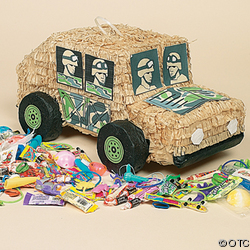
  • Now out of date, but probably worth mentioning, via BoingBoing: an "Army vehicle piñata" for your next jihadarama:

    photo of Army vehicle piñata

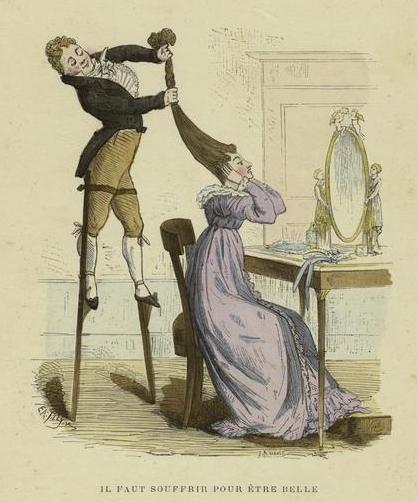
  • Another leftover, explanation of which would ruin the effect:

    French guy on stilts holding up the hair of some lady while she looks in the mirror

Those are all the headlines for now, sports racers!

WHAT IS THIS THING DOING IN MY HOUSE

a donkey piñata that was in my house

??

His Name Is Probably Hideki

Printing images using a PictBridge compliant printer

[…]

Notes:

  • You cannot print movies.

Also:

You can use the following batteries below:

  • R6 (size AA) alkaline batteries…
  • ZR6 (size AA) Oxy Nickel Primary Battery…
  • HR 15/51:HR6…

You cannot use the batteries unlisted above

I've done a fair amount of listing in my life, but I can't say I've ever had the pleasure of unlisting…

A few minutes after typing that out, it occurred to me what they're trying to say there: you can use the batteries they list, but you can't use any batteries they don't list. Duh. But there's something extremely strange about speaking of "the batteries unlisted above." It sounds as if they're actively committing a deed called "unlisting" upon a definite set of objects, as opposed to merely neglecting to list some hazy blob of stuff — as if, whenever they enumerate some possibilities, they're also not-enumerating every single other possibility, where not-enumerating is a physical exertion that requires an expenditure of energy, sweat trickling down their foreheads. As D.L. said recently, every time you order something at a restaurant, you're simultaneously not ordering everything else — and the anxiety he expressed over this ineluctable aspect of the human condition is about what I imagine was experienced by some Japanese guy at the Sony factory where my camera was made as he painstakingly unlisted all the non-R6/ZR6/HR 15/51:HR6 batteries he could think of, hoping against hope that he didn't forget anything.

Wednesday, December 27, 2006

Exegesis

So, as previous entries have already indicated in abundance, I'm currently reading a book called Dressing the Elite: Clothes in Early Modern England. It's by no means a terrible book, but it does exemplify a phenomenon that I've noticed, in my diletantish way, in a lot of recent historiography: the baleful influence of the perceived need to make an argument. Dressing the Elite is, at bottom and at its best, a collection of citations, anecdotes, and examples, many of them funny, most of them interesting — but it doesn't exactly make a point. It just sort of assembles different materials pertaining to clothes from a range of disparate sources and writes sentences around them — a bit of summary, a bit of light analysis. There's certainly some light shed on what people were wearing back then and just how intensely they worried about it, but nothing earth-shaking. If you ask me, though, that's just fine. There's nothing wrong with compiling information, publishing it, and moving on. This is how people learn about things. It's a valuable enough public service — maybe not so valuable that a book needed to be printed putting this stuff out there, but if we lived in a world of fully electronic academic publishing, it would most definitely be worthwhile to let this work circulate on the internets.

But because the academia of today insists that scholarly works can't just compile information but must also make contentious, counterintuitive, non-commonsensical claims, Dressing the Elite ends up going in for a lot of dodgy, secondhand critical-theory nonsense that doesn't really help anyone understand anything. It's a pose, not an argument — but it looks enough like an argument to pass for one. For instance, Vincent (the author) mentions how pretty much everyone who writes about sumptuary law says that it was kind of dumb, not really enforced, never worked, etc. But she follows the lead of the plagiarist Alan Hunt (who was attacked in these "pages" on November 26 — no links, catdogs, I'm offline!) in scare-quoting this whole line of discussion as, like, totally "obvious." Therefore wrong.

Tempting as it is to accept this at face value, Hunt, from his revisionist position, warns us against such easy assumptions. To think so is to fall into the trap of equating the enforcement of a law with its validity and significance (Vincent 140).

You know, I would have thought that was a pretty safe trap to fall into in most cases, if by "significance" you mean "significance to the average person at the time, or let's say to more than 1% of the population of the country." And I have no idea what "validity" is supposed to mean there — a law that goes unenforced is certainly still "valid" if it was passed by means of the proper procedure, but all that means is that it's a law.

We're supposed to be impressed by the counterintuitive move of sidestepping the enforcement issue, but the problem is that neither Vincent nor Hunt have actually uncovered any evidence that previous researchers missed. So they just try to spin it differently: "Hunt points out that the paradox at the heart of the sumptuary project is that, although supported by the majority, it was impossible to enforce compliance with its provisions. 'Indeed enforcement always ran the risk of alienating the broad consensus that favoured the existence of such laws'" (Vincent 142–3). The idea is that people were sort of in favor of ending excess in apparel, but they didn't want to stop wearing fancy clothes themselves, so they might favor a law about it, but they wouldn't really follow it.

This is just a "human nature" point restated in slightly more pretentious terms by people who would shudder to be associated with the notion of a "fixed," "ahistorical" human nature: people kind of want to punish their neighbors for stuff they do, but they don't want to be punished themselves. Not that profound. But in the course of dressing up this point, Vincent and Hunt casually make up a bunch of stuff. "The sumptuary project" (there's that goddamn word again) was "supported by the majority"? The majority of whom? Occasionally a majority of the House of Commons and the House of Lords would vote for one law or another, but plenty of these laws failed to command majority support. But the unqualified use of "the majority" clearly hints at a broader meaning: a majority of the population of England. But obviously there weren't public-opinion polls in the 17th century. And if there had been, they wouldn't have been particularly relevant to this issue. No one has a clue whether or not the majority supported sumptuary laws or even knew about them, but through sheer rhetorical oomph Vincent & Hunt can kinda sorta pretend they do, even though they would deny it if pressed. Likewise there's that bit about "broad consensus" — these are just words. How broad? Give me some numbers, Hunt. You almost certainly don't have any, because votes in Parliament weren't counted with anything like consistency during this period.

Vincent moves on to a pretty cute story about how the then Prince Charles and the then Marquis of Buckingham got caught passing through France wearing crappy disguises — fake beards that fell off. French dudes were like, "Um, you guys are hell of shady with those fake beards; what gives?" They were like, "Here is a bribe" (I think). The end.

But Vincent can't just stop at telling a cute story, so she has to ask silly questions like "with their disguise but not their identities exposed, why were these men so questionable that their movements had to be marked and controlled?…[W]hat was so transgressive about not being as they seemed?" I mean, isn't this kind of, well, obvious? Disguises in the night = thieves. You wear a disguise when you don't want to get caught for something. It's not "transgressive"; it's just suspicious. "Marked," "controlled," "transgressive," the idea that caring about differences between "being" and "seeming" makes you an authenticity-obsessed reactionary with weird sexual feelings: these are just stupid vocabulary tricks that give a patina of critical-theory gravitas to a kind of affected ignorance about why someone would be worried that Englishmen with fake beards were wandering around the countryside at night. Hell, I'd be worried too if I were a 17th-century French guy, and I certainly don't have any weird sexual feelings.

Vincent also riffs on how everyone hated vagabonds and vagrants and were super-scared of them. All of those attitudes go, of course, into intense scare quotes, because we postmodernists have to love and cherish the rootless and the marginal. Okay, fine. The vagrants got a raw deal, their lives were terrible, and the noblemen and gentry were major assholes. But why does this mean we have to pretend that they were just hallucinating the dangers? Vagabonds killed and stole and did unpleasant things, which made it scary to go around at night; you can retain sympathy for them, or claim that the fear was still overblown in proportion to the severity of the danger, but those positions are too obvious to take, so Vincent has to basically suggest that all the fears about vagabonds were invented. Because, I don't know, everyone was scared of cross-dressers.

I've kind of lost my thread here, and I'm sure no one is interested in reading more examples of poorly justified arguments about 17th-century English clothing. But my bigger, equally poorly justified argument is this: Vincent's heart isn't really in all this hand-waving wankery. She doesn't try especially hard to make it compelling. Maybe that's simply because she knows that her audience will just accept that this is the way you talk about "the body" and such nowadays. But I feel like what actually happened was that she got interested in a funny little topic, drew up a list of cases to analyze, and forced herself to make more of them than she really had a right to, because That's What Academics Do. What a waste. Why not just let it be what it is?

This is sort of related to a point that Unger makes in Knowledge and Politics when he distinguishes between the classical humanities — grammar, theology, and legal doctrine — and the corresponding social sciences — linguistics, the sociology of religion, and the sociology of law. No one really does the former anymore: developing and recapitulating old ideas with minor adjustments, treating oneself as part of the same tradition as the stuff you're analyzing instead of as a distanced, third-party observer. It's more modest, more boring, maybe, but there's no reason to think that it has to be less rigorous or precise. And it's among the kinds of stuff that I really admire, come to think of it. Massive scholarly editions of esoteric old books, annotated novels, comics that refurbish but don't fundamentally alter characters like Cat-Man or Kite-Man or Plant-Man (all villains, incidentally): stuff that's ambitious in a limited but still occasionally major way, stuff that respects the past even as it moves beyond it, maybe recognizing that, yeah, it will probably never matter to anyone that this punctuation mark is a left bracket in Manuscript A but a left brace in Manuscript B, but fuck it, let's just mark it down anyway, because goddammit there is a thing called integrity in this world, and when we cut corners and fudge facts, we know we're doing it. And that's what makes it so dishonorable, even when the stakes are low and no one gets hurt.

That's why Alex is right to be annoyed that Marvel published a comic in which Spider-Man has a baby but has since refused to acknowledge that this ever happened. Sloppy and arrogant.

Happy birthday, Alex!

EDIT: I can't resist documenting my continuing annoyances.

With pseudo-scientific precision the rogues were sorted into complicated sub-groups, each of them named and explained.…Like insect specimens they were labelled and described, pinned to the page by the sharpness of textual observation (Vincent 157).

Well, we can hardly blame pamphlets from the late 16th century for being "pseudo-scientific" — science itself was "pseudo-scientific" back then. And the amount of violence inflicted upon the rogues by making up silly categories to put them in is roughly comparable to the amount of violence inflicted upon mullets or hipsters by those little books that do the same to them.